
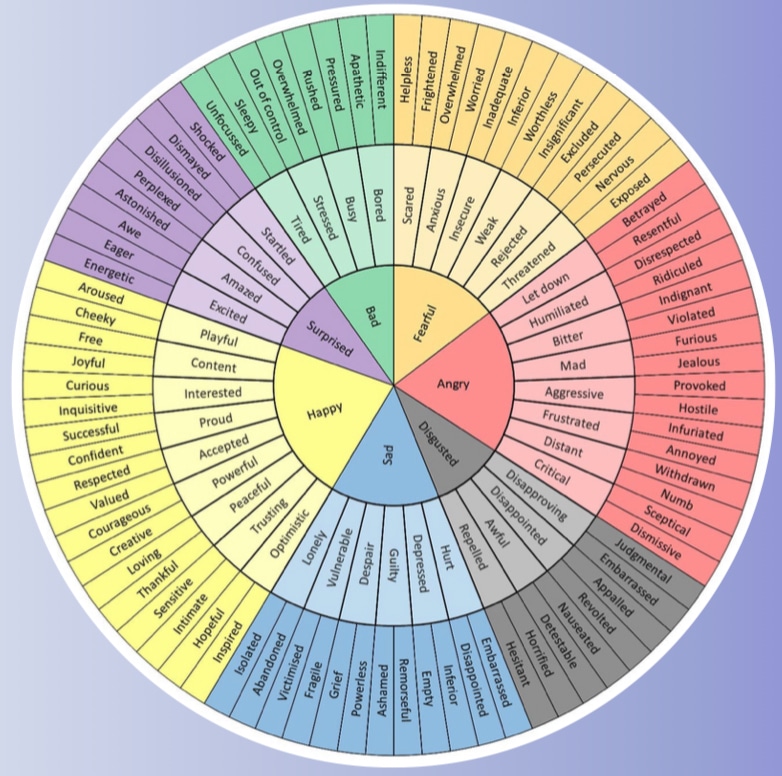
The Wheel of Emotions or the Feelings Wheel, is a tool that can help you identify, label, and understand your emotions more effectively.
It visually represents a wide range of emotions and their relationships to one another, allowing you to pinpoint and express how you are feeling with greater precision.
Here’s how you can use it:
1. Identifying Emotions:
- Start by looking at the Emotional Wheel, which typically consists of different layers or sections representing primary emotions (e.g., joy, sadness, anger) and their variations.
- Scan the wheel to identify the emotion or emotions you are currently experiencing. You may find that your feelings are a combination of several emotions from different categories.
2. Exploring Emotion Variations:
- Use the Emotional Wheel to explore the nuances and variations of basic emotions. For example, under the category of “anger,” you may find descriptors such as irritation, frustration, or rage.
- By pinpointing the specific variation that best describes your feelings, you can gain a deeper understanding of your emotional state and communicate it more effectively to others.
3. Expressing Emotions:
- Once you have identified the emotions you are feeling, consider how you can express them in a healthy and constructive way. This may involve journaling, talking to a trusted friend or therapist, or engaging in creative outlets like art or music.
- Expressing your emotions can help you process and release them, leading to greater emotional awareness and well-being.
4. Self-Reflection and Regulation:
- Use the Emotional Wheel as a tool for self-reflection and introspection. Consider the root causes of your emotions, any patterns or triggers you notice, and how you typically respond to different feelings.
- Practice emotional regulation techniques, such as deep breathing, mindfulness, or positive self-talk, to manage intense emotions and cultivate emotional balance.
5. Enhancing Emotional Intelligence:
- Regularly using the Emotional Wheel can enhance your emotional intelligence by increasing your awareness of your own emotions and those of others.
- Pay attention to how different emotions manifest in your body, thoughts, and behaviors, and how they impact your relationships, decision-making, and overall well-being.
6. Communication and Connection:
- Share the Emotional Wheel with others as a tool for improving communication and connection in relationships. Discussing emotions openly and accurately can foster empathy, understanding, and deeper connections with others.
- Encourage friends, family members, or colleagues to explore their own emotions using the wheel, creating a shared language for emotional expression and support.
The Emotional Wheel can be a valuable resource for developing emotional awareness, expression, and regulation.
By using this tool mindfully and regularly, you can deepen your understanding of your emotions, foster self-compassion, and navigate your inner world with greater clarity and insight.