
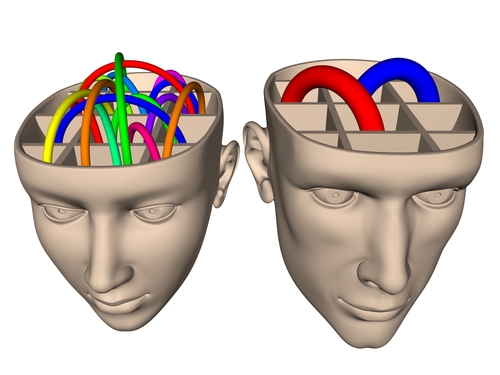
The concepts of “left brain” and “right brain” refer to two hemispheres of the brain that are traditionally associated with specific functions, thought processes, and ways of interacting with the world. While this dichotomy has become a popular way to discuss the differences in cognitive styles, it’s important to understand that brain functions are complex and interconnected. Here’s an overview of the left and right brain characteristics:
Left Brain Characteristics
1. Logical and Analytical Thinking:
The left hemisphere is often associated with analytical reasoning and logical problem-solving. It processes information in a sequential and methodical manner.
2. Language Skills:
Language abilities, including grammar, vocabulary, reading, and writing, are predominantly managed by the left brain. This includes both comprehension and verbal expression.
3. Mathematical Ability:
The left hemisphere is typically involved in mathematical skills and computations, assisting with tasks that require precision and logical reasoning.
4. Detail-Oriented:
Individuals who rely more on their left brain may focus on details and specifics rather than the broader context.
5. Organised and Structured:
The left brain tends to prefer organised, structured approaches to tasks, often following established rules and guidelines.
Right Brain Characteristics
1. Creative and Artistic Thinking:
The right hemisphere is associated with creativity, intuition, and artistic abilities. It is involved in expressing emotions and generating new ideas.
2. Holistic Processing:
The right brain processes information in a more holistic manner, often seeing the bigger picture rather than focusing solely on details.
3. Spatial Awareness:
Skills related to spatial awareness, such as interpreting maps, visualising objects, or understanding spatial relationships, are primarily managed by the right brain.
4. Emotional Expression:
The right hemisphere plays a significant role in processing and expressing emotions, making it integral to empathy and understanding social cues.
5. Imagination and Insight:
Individuals with a strong right-brain orientation tend to excel in imaginative thinking, often approaching problems from unique perspectives.
Interconnection of Left and Right Brain
1. Corpus Callosum:
The two hemispheres are connected by a bundle of nerve fibers called the corpus callosum, allowing for communication and cooperation between them. Most cognitive tasks require the integration of both hemispheres.
2. Balanced Thinking:
While individuals may have preferences for left-brain or right-brain thinking, effective problem-solving and creativity often involve a balance of both analytical and intuitive approaches.
3. Beyond Dichotomy:
Recent research in neuroscience suggests that the left-right brain dichotomy is an oversimplification. Many cognitive processes are distributed across both hemispheres and involve complex interactions.
Understanding the characteristics of left and right brain thinking can provide insight into different cognitive styles and preferences. However, recognising that both hemispheres work together to create a comprehensive understanding of the world is crucial. Emphasising balance between analytical and creative thinking can enhance problem-solving abilities, foster innovation, and support personal growth.